
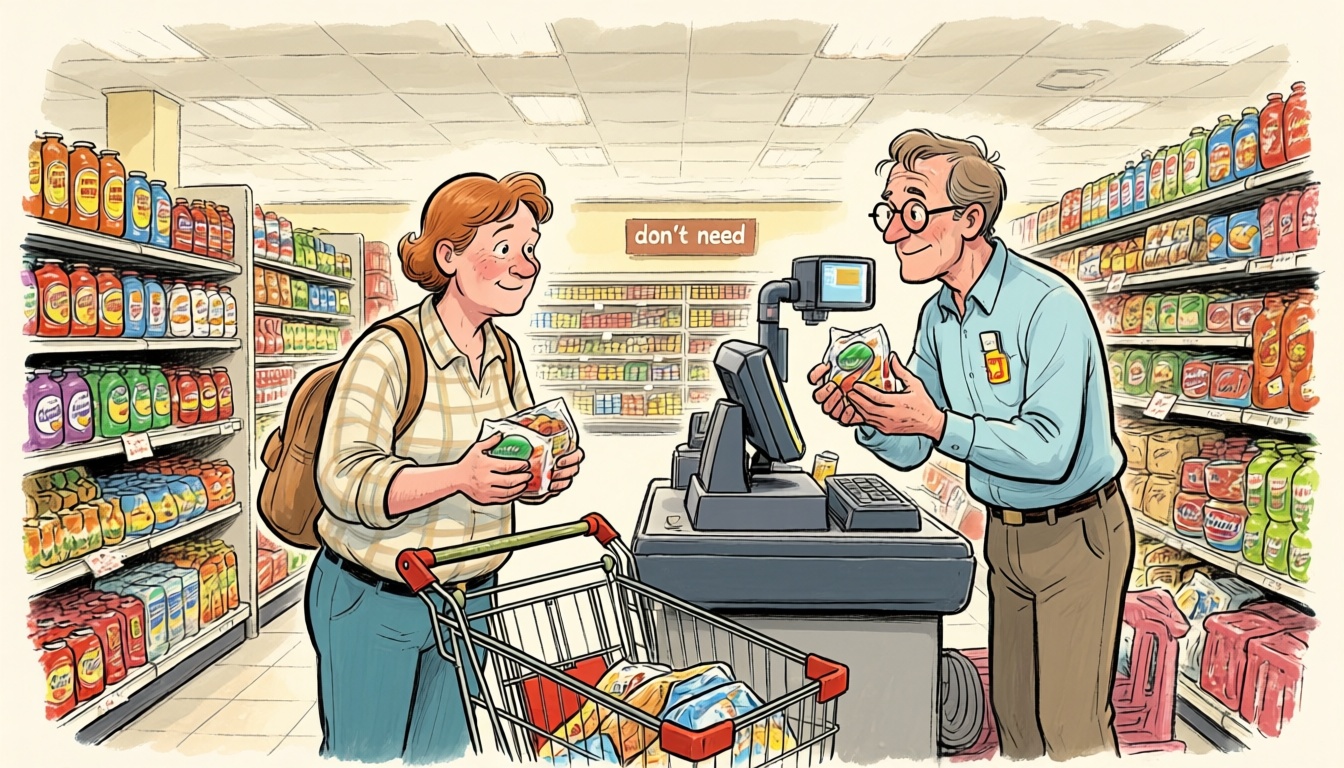
Before, software purchases felt straightforward; you bought a product, used it, and perhaps upgraded later. Now, the landscape has shifted, with many companies pushing premium features and higher-tier subscriptions even before you’ve had a chance to fully explore the basic offering.
This aggressive upselling often starts at the checkout, where an array of add-ons and "essential" upgrades appear. It’s frustrating to be asked to evaluate a premium feature when the core product remains untried. The experience doesn't improve post-purchase, with persistent "Upgrade" buttons embedded directly into the application interface, a constant reminder of locked functionalities.
This trend is not just annoying; it fundamentally undermines the customer experience. Transparency in pricing and features should be paramount, allowing users to understand the full value of their purchase without constant pressure to spend more.
The Pre-Purchase Upsell Epidemic
The practice of upselling before a user can properly test a product has become increasingly common. Consider the recent moves by industry giants: Adobe, in September 2026, announced new AI-powered features for Creative Cloud, with some advanced functionalities requiring higher-tier subscriptions even for existing users.
Similarly, Salesforce introduced new "Growth Edition" bundles in July 2026, packaging additional services and higher user limits, presented as essential for scaling businesses during initial sales consultations. Microsoft's Dynamics 365, in June 2026, expanded its module offerings, segmenting some previously standard features into separate, higher-cost add-ons. These examples highlight a clear industry shift towards maximizing initial contract value rather than fostering organic growth through user satisfaction.
Dr. Anya Sharma, a professor of digital marketing at the London School of Economics, noted in September 2026 that "Software companies are increasingly leveraging behavioral economics to introduce higher-value offerings early in the customer journey." She argues that the perceived value of "future-proofing" often outweighs the immediate need for extensive testing of basic functionalities. This psychological play capitalizes on a user's optimism for what the software could do, rather than what it demonstrably does.
Erosion of Trust and Buyer's Remorse
This aggressive upselling strategy, while potentially boosting initial revenue, carries significant risks. Mark Chen, a tech journalist, argued in an August 2026 TechCrunch article that this approach can lead to "buyer's remorse and churn if the promised value doesn't materialize after the initial up-sell." Customers expect to experience the core product's efficacy before committing to premium tiers.
A Q3 2026 Gartner survey of 1,500 B2B software buyers revealed that 45% felt pressured to consider higher-tier subscriptions or additional modules during the initial sales process, prior to extensive product testing. Alarmingly, 22% of these buyers ultimately downgraded their subscriptions within the first six months. This data suggests a clear disconnect between initial sales tactics and long-term customer satisfaction.
The counterargument often posits that offering premium features early allows customers to see the full potential of a product. However, this perspective overlooks the fundamental need for trust. If a user feels they are being constantly steered towards a more expensive option before they have even assessed the base product, that trust erodes quickly.
The Case for "Try Before You Buy"
Contrast this with the "try-before-you-buy" model for core features. A 2025 Forrester Research report, using 2024 data, found that companies employing this approach experienced a 15% higher customer retention rate compared to those pushing up-sells pre-purchase. This isn't surprising. When users can thoroughly evaluate a product's base functionality, they develop a genuine appreciation for its value before considering additional investments.
User satisfaction scores were also 10% lower for products where up-sell attempts were prominent before a free trial or basic version was fully explored, according to a 2025 study by UserTesting. This evidence directly contradicts the idea that early upselling is always beneficial. It damages the user experience and, ultimately, the bottom line through increased churn.
The rise of AI-powered features is a significant driver here, with many providers positioning AI as a premium add-on. The subscription economy also incentivizes vendors to maximize initial contract value. But these industry shifts should not come at the expense of customer trust and satisfaction.
Building a Better Customer Journey
Instead of front-loading upsells, software companies should prioritize a transparent and value-driven customer journey. Offer a robust base product with clear pricing. Allow users to genuinely experience its benefits without constant distractions or locked features. This builds confidence and demonstrates the company's belief in its core offering.
Once a user has established a positive relationship with the software, then, and only then, introduce premium features as logical extensions of their current workflow. This organic approach to upselling feels less like a sales pitch and more like a helpful suggestion. It respects the user's intelligence and their right to make informed decisions.
Ultimately, long-term customer loyalty and advocacy are far more valuable than short-term revenue spikes driven by aggressive pre-purchase upselling. Focus on providing an excellent product first, and the upgrades will follow naturally.
Sources
- How do I pre-sell software before building it? — sal.salable.app
- How To Pre-Sell Your Software Product Before Building It — youtube.com
- Sell It Before You Build It: How to Presell Your New Product Idea — designli.co
- 8 Proven Strategies to Pre — failory.com
- How to Presell Your Software Products in 5 Steps — keyzy.io
- reddit.com — vertexaisearch.cloud.google.com
- Top Platforms for Pre-Selling Your Product Before Launch — foundra.ai
- 13 Best Upselling Strategies Every Customer Success Manager Needs to Know — hyperbound.ai
- How to upsell: Tips and tricks from the pros — zendesk.de
- Upsell Without Losing The Sale: A Quick Guide For Startups — salesforce.com
- Mastering Upselling without Being Pushy: 10+ Techniques for Customer Loyalty — cxtoday.com
- 10 upselling strategies for 2025 that don — blog.hubspot.com
- Cross Sell — csell.io
- 17 SaaS Upsell Strategies to Convert Free Users (2026) — ventureharbour.com
- Trial or Freemium? 5 Reverse Trial Hacks for Saas Business — plgos.com
- How to Build a SaaS Trial Strategy that Converts — payproglobal.com
- The Conversational AI platform for Ecommerce — gorgias.com
- Attio: The CRM for agentic revenue — attio.com